


The solar industry is evolving at an incredible pace. What seemed futuristic just a few years ago is now becoming reality. In 2026, solar panels are more efficient, smarter, and more versatile than ever before. From perovskite tandem cells breaking efficiency records to transparent solar windows and AI-powered energy systems, the latest innovations are transforming how we generate and use electricity.
At Lobel Green Energy Pvt. Ltd., we closely follow these advancements to deliver cutting-edge solar solutions that help homes, businesses, and industries reduce energy costs and embrace a cleaner future.
What’s New in Solar Panel Technology in 2026?
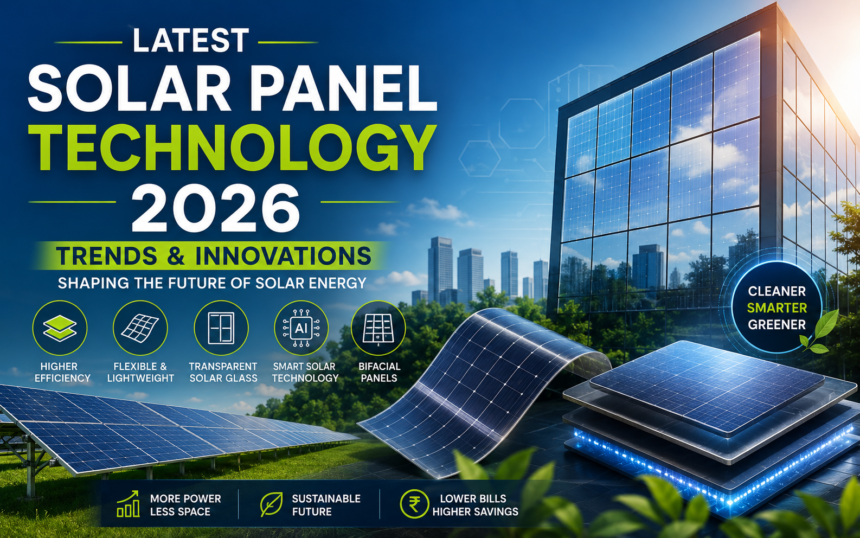
The latest solar technologies include:
- Perovskite-silicon tandem solar cells with record efficiencies approaching 34.85% in research settings.
- Bifacial solar panels that generate electricity from both sides.
- Flexible and lightweight solar sheets for portable and curved surfaces.
- Transparent solar glass that turns windows into power generators.
- AI-driven smart solar systems that optimize performance and predict maintenance needs.
Solar Efficiency Is Reaching New Heights
Solar panel technology has advanced significantly over the last decade, delivering higher efficiency and better performance than ever before. In 2010, most residential solar panels operated at an efficiency of around 15% to 17%. By 2015, improvements in cell design and manufacturing processes increased efficiency levels to approximately 18% to 20%. The industry continued to evolve, and by 2020, premium solar panels commonly achieved efficiencies between 20% and 22%. Today, in 2026, leading residential solar panels routinely reach 22% to 23% efficiency, enabling homeowners and businesses to generate more electricity from the same rooftop area. This remarkable progress means fewer panels are required to achieve desired energy output, making solar installations more practical, cost-effective, and suitable for properties with limited roof space. Higher efficiency panels also perform better in low-light conditions, helping maximize energy production throughout the year and improving the overall return on investment for solar system owners.
Perovskite Solar Cells: The Biggest Breakthrough
Perovskite is a new crystal-based material that absorbs sunlight extremely effectively. When combined with traditional silicon in a tandem cell design, it can capture a wider range of solar energy and achieve much higher efficiencies.
Why Perovskite Matters
- Lower manufacturing costs compared to conventional silicon.
- Higher power output from the same panel size.
- Potential for lightweight and flexible solar products.
Major manufacturers around the world are investing heavily in perovskite technology, and utility-scale projects have already begun using commercial tandem panels.
Bifacial Solar Panels: Power from Both Sides
Bifacial panels collect sunlight from the front and the back of the module. Reflected light from the ground, water, or nearby surfaces can increase energy production by 5%–20%.
Benefits of Bifacial Panels
- Higher energy generation.
- Improved performance in snowy or reflective environments.
- Longer lifespan due to durable dual-glass construction.
- Excellent for ground-mounted and commercial installations.
Flexible and Lightweight Solar Panels
Flexible solar technology is opening up new applications that traditional rigid panels cannot serve.
Where They Are Used
- RVs and boats.
- Portable solar chargers.
- Curved roofs and lightweight structures.
- Wearable electronics and outdoor equipment.
These panels are particularly useful where weight and portability are critical factors.
Transparent Solar Panels for Buildings
Imagine windows that generate electricity while remaining transparent. That’s the promise of transparent solar technology.
These panels absorb ultraviolet and infrared light while allowing visible light to pass through, making them ideal for:
- Office buildings.
- Shopping malls.
- Skylights.
- Greenhouses.
Although still in the early stages of commercialization, transparent solar is expected to become increasingly common by the end of the decade.
Smart Solar Technology and AI
Modern solar systems are becoming intelligent energy platforms.
AI and Smart Monitoring Can:
- Track performance in real time.
- Detect faults before they become major problems.
- Optimize energy production during shading conditions.
- Integrate with batteries, EV chargers, and smart home devices.
- Schedule maintenance automatically.
For homeowners and businesses, this means better reliability and maximum energy savings.
What Solar Technology Can You Buy Today?
The solar industry is witnessing rapid innovation, but not every breakthrough technology is widely available for immediate use. In 2026, high-efficiency monocrystalline solar panels remain the most popular choice for residential and commercial installations due to their excellent performance, durability, and proven reliability. Bifacial solar panels, which generate electricity from both sides of the module, are also widely available and increasingly adopted in commercial and utility-scale projects. Smart solar inverters and AI-powered monitoring systems have become standard features in modern solar installations, helping users optimize energy production, detect faults early, and improve system performance.
Meanwhile, some emerging technologies are gradually entering the market. Perovskite-silicon tandem solar panels have begun limited commercial deployment, particularly in utility-scale projects, but broader residential availability is still developing. Transparent solar windows, which can generate electricity while functioning as building glass, are currently in the early stages of commercialization and are expected to see wider adoption in the coming years. Ultralight fabric solar cells and other advanced photovoltaic technologies remain largely experimental, with researchers continuing to improve their efficiency, durability, and commercial viability. As these innovations mature, they have the potential to transform the future of solar energy and expand the range of applications where solar power can be effectively utilized.
What Does This Mean for Homeowners and Businesses?
The rapid progress in solar technology brings several practical advantages:
- Lower Electricity Bills: More efficient panels generate more power from the same roof space.
- Better Return on Investment: Improved performance and longer warranties increase long-term savings.
- Future-Ready Energy Systems: Smart solar solutions integrate seamlessly with batteries and electric vehicles.
- More Installation Options: Flexible, bifacial, and building-integrated technologies expand where solar can be deployed.
Frequently Asked Questions
What is the newest solar panel technology in 2026?
The newest technologies include perovskite-silicon tandem cells, transparent solar glass, flexible solar sheets, and AI-powered smart solar systems.
What are the most efficient solar panels available?
Premium residential panels typically achieve 22%–23% efficiency, while advanced commercial modules exceed 25%.
Are bifacial solar panels worth it?
Yes, especially for ground-mounted systems, pergolas, and commercial installations where reflected light can significantly boost energy production.
When will perovskite solar panels become common for homes?
Wider residential availability is expected between 2027 and 2028 as manufacturing capacity expands.