



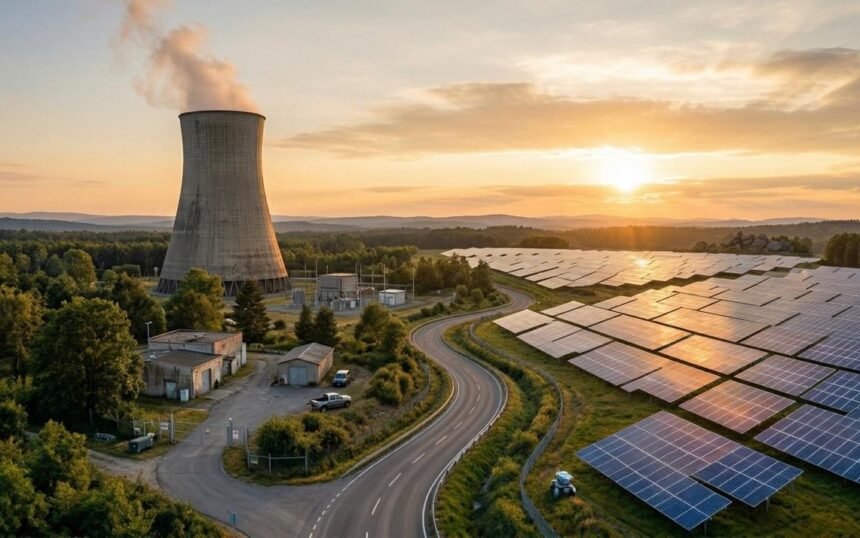
On April 6, 2026, India achieved a major milestone at the Kalpakkam Nuclear Complex with the first criticality of its Prototype Fast Breeder Reactor (PFBR).
While this is a breakthrough in nuclear science, its significance extends across the entire clean energy ecosystem, including the rapidly growing solar industry.
At Lobel Green Energy, this development is seen as a complementary advancement that strengthens the overall renewable energy landscape rather than competing with it.
Understanding Criticality
Criticality refers to the point at which a nuclear reactor sustains a controlled chain reaction and produces continuous energy without external input.
This milestone marks the transition from experimental phase to power generation readiness.
In the broader energy mix:
- Solar energy generates power during daylight hours
- Nuclear energy provides continuous, round-the-clock supply
Together, they create a more balanced and reliable clean energy system.
Solar and Nuclear: A Complementary Energy Model
India’s energy future depends on integrating multiple clean energy sources.
Solar energy offers:
- Abundant and renewable power
- Cost-effective scalability
- Decentralized applications across residential and industrial sectors
Nuclear energy provides:
- Continuous baseload power
- Zero emissions during operation
- High energy density and reliability
This combination enables a stable grid while accelerating renewable adoption.
India’s Three-Stage Nuclear Program and Renewable Impact
India’s long-term nuclear vision, conceptualized by Homi Jehangir Bhabha, is designed to maximize domestic resources and ensure energy security.
- Stage 1: Uranium-based reactors
- Stage 2: Fast Breeder Reactors (PFBR milestone achieved)
- Stage 3: Thorium-based reactors
With Stage 2 now active, India moves closer to a thorium-powered future.
For the solar industry, this means improved grid reliability, enabling higher solar penetration without instability.
Why This Matters for the Solar Industry
A stable baseload from nuclear energy allows solar power to expand more efficiently.
Key impacts include:
- Improved grid stability, reducing variability challenges of solar power
- Faster deployment of large-scale solar projects
- Growth of hybrid energy systems combining solar, storage, and grid support
- Increased policy support for clean energy infrastructure
This creates a stronger foundation for long-term solar growth.
Thorium Advantage and Long-Term Sustainability
India’s significant thorium reserves provide a long-term clean energy opportunity.
Key benefits:
- Lower long-term radioactive waste compared to uranium
- Abundant domestic availability
- Reduced dependence on imported fuels
Combined with solar energy, this supports a self-reliant and sustainable energy ecosystem.
Future Outlook for Solar and Clean Energy
India’s target of expanding nuclear capacity alongside rapid solar growth indicates a dual strategy for clean energy development.
For the solar sector, this translates into:
- Increased demand for solar installations
- Expansion of hybrid energy solutions
- Greater adoption of energy storage technologies
- Stronger industrial and commercial solar opportunities
Lobel Green Energy’s Perspective
At Lobel Green Energy, the future is built on integration, not competition.
Solar energy remains the fastest-growing renewable source, while nuclear energy provides the stability required for scale.
This milestone reinforces India’s commitment to:
- Energy independence
- Sustainable growth
- Long-term clean energy leadership